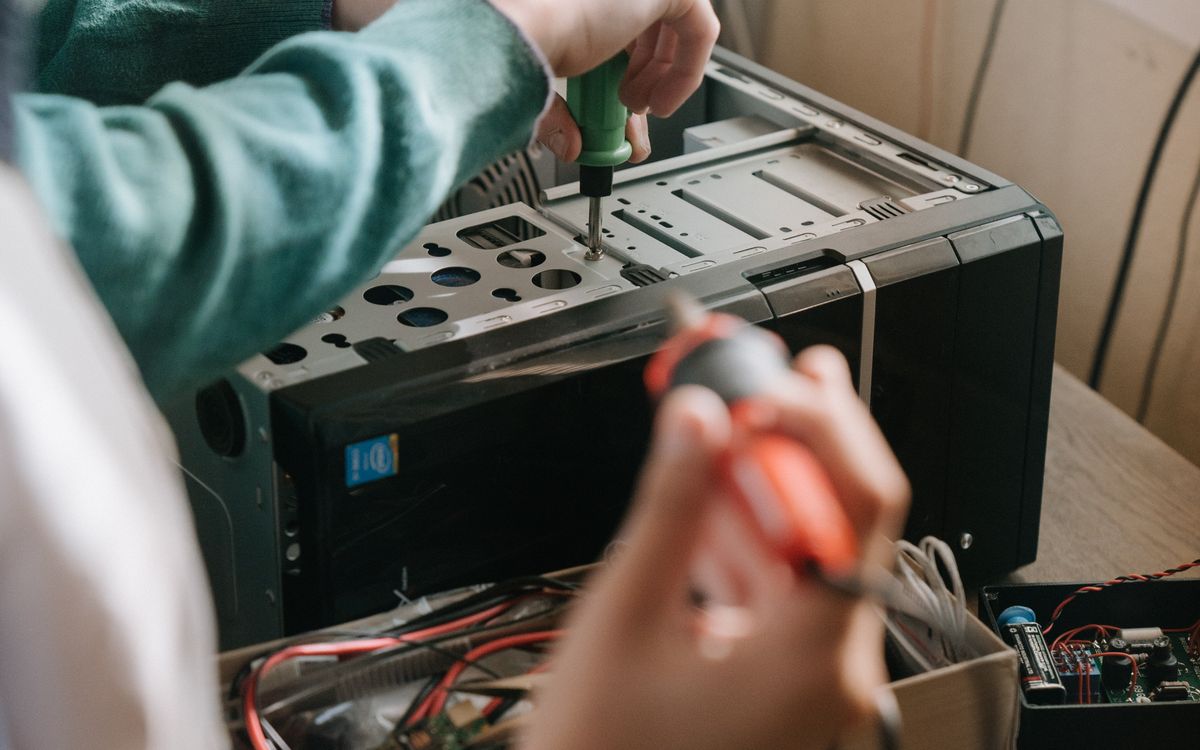
The words refurbished, used and certified get used interchangeably in listings, but they describe three different transactions. A used device is a promise from a stranger: it worked when I shipped it. A refurbished device is a promise from a business: it was inspected, tested, and someone will answer if it fails inside a defined window. A manufacturer-certified device is the strongest version of that second promise, because the company that built the hardware stands behind the restoration. Understanding which promise you are buying matters more than the price sticker, because the entire risk of a second-hand purchase lives in what happens during the first months of ownership.
Three labels, three different promises
Manufacturer-refurbished units come from the original maker. Apple’s Certified Refurbished program, for example, runs every unit through full functional testing, replaces any defective modules, installs a new battery and outer shell in refurbished iPhones, and ships the device with the same one-year limited warranty and 14-day return policy that apply to new hardware.
Third-party refurbished covers everyone else: marketplace sellers, trade-in processors, and dedicated refurbishers. Quality varies because the refurbisher, not the manufacturer, defines the process. The mitigating factor is that the large marketplaces police this. Amazon Renewed requires items to be professionally inspected, tested and cleaned by Amazon-qualified suppliers; Back Market vets refurbishers against a quality charter that includes an inspection of up to 100 points per device.
Used means none of the above. No inspection standard, no warranty, no return window beyond whatever the platform or local law provides. A used listing is not automatically bad — plenty of privately sold devices are fine — but the buyer absorbs all of the downside risk.
What the grades actually measure
Refurbished grades — whether A/B/C, Excellent/Good/Fair, or Premium — describe cosmetics, not reliability. Amazon Renewed defines its tiers by what is visible when the device is held 12 inches away: the top tiers show no visible damage at that distance, while the lowest tier allows scratches you can feel. Back Market grades from Premium (no visible wear) down to Fair (visible scratches and dents) and states plainly that all grades are 100% functional — the difference is purely cosmetic.
That one-way relationship is the key to reading listings. A grade tells you what the device looks like; it says nothing about whether the battery was tested, the ports were checked, or the previous owner’s data was wiped. For function, you have to read the warranty and the battery policy — the two lines that cost the seller money if they are wrong.
Warranty and return windows: the real signal
The return window is your actual quality-control mechanism, because it is the period during which you can discover problems and hand the device back. The verified terms differ sharply across tiers. Apple Certified Refurbished: one-year warranty, 14-day returns. Back Market: 12-month warranty from every seller, 30-day free returns. Amazon Renewed: a 90-day replacement or refund guarantee, longer than most new-product windows at some retailers.
A private used sale typically has no equivalent. If a used phone develops a fault on day 31, there is usually no one to call. This asymmetry — months of recourse versus none — is the core of the risk difference between refurbished and used, and it is worth real money. A refurbished unit at a 15% discount with a year of warranty backing is often a better expected-value deal than a used unit at a 30% discount with none.
Battery health: the number that matters most
Batteries are the component most likely to have meaningfully degraded in a first owner’s hands, and they are the most expensive part to replace in phones and laptops. Apple rates iPhone 14-and-earlier batteries to retain 80% of original capacity at 500 full charge cycles — roughly a year and a half of daily full cycles — so a three-year-old used phone can plausibly arrive well below that line.
The refurbishment channels handle this differently, and the differences are verifiable. Apple replaces the battery outright in Certified Refurbished iPhones. Amazon Renewed requires that batteries exceed 80% of original capacity. Back Market requires a minimum of 80% battery health and states that batteries below the requirement are replaced during refurbishment. Private sellers commit to nothing — but most phones will show a battery health reading in settings, and any honest seller will share a screenshot before you buy.
What refurbishing cannot restore
Even the best refurbishment has a hard limit, and it is worth knowing before you pay a premium: water resistance. Refurbishers open the device to test and replace parts, and Back Market says so directly — during refurbishing, devices are opened for testing, which is why sealing is not guaranteed and the original waterproofing is rarely maintained. If a phone’s IP68 rating or a laptop’s sealed keyboard was part of why you chose it, a refurbished unit may not deliver that trait anymore.
Warranty exclusions reveal the same boundary. Back Market’s 12-month warranty does not cover damage from drops or liquids, or units opened by the buyer. Manufacturer refurbishment is the exception that partially restores the trait: Apple’s program is held to the same standard as new hardware because Apple rebuilt it.
Where the risk gap narrows
The refurbished-versus-used gap is widest in phones, laptops and tablets — categories with batteries, fragile screens, and long service lives. It narrows in two directions.
It narrows toward zero where cosmetics barely matter and testing is simple: cables, chargers, mechanical keyboards, and older audio gear can be evaluated in seconds, and a used purchase carries little hidden-failure risk if it works on arrival. It also narrows when the used channel has its own enforcement — buying used through a marketplace with a buyer-protection program is not the same transaction as a cash meetup sale, because the platform inserts a dispute window where none would exist.
The gap also narrows for specific brands where the software clock matters. A used flagship from a maker with a seven-year update commitment (Google Pixel 8 and later, Samsung Galaxy S24 and later) retains most of its useful life, which makes the condition question less critical than the support question — a point our guide on realistic device lifespans covers in detail.
How to shop the refurbished channel
Read four things in order, and most bad purchases filter themselves out. First, who warrants the device and for how long — one year from Apple or Back Market, 90 days from Amazon Renewed, and a number for anyone else you are considering. Second, the return window, which is your real inspection period. Third, the battery policy, in writing. Fourth, the cosmetic grade definition — the distance-and-lighting standard tells you whether “Excellent” means flawless or means “scratches you can feel.”
Price benchmarks the whole decision. The useful comparison is not refurbished-versus-used on the same day; it is the discount versus the value of the warranty and battery floor you are giving up. When the discount is small, the certified tier wins on math alone. When the discount is large and the category is simple, the used channel is rational. And if the plan is to protect the purchase against accidents after it arrives, the overlap between your credit card benefits and a separate plan is its own calculation — covered in our guide on whether extended warranties are worth it. Reading the seller’s full spec terms before checkout, the habit described in how to read a spec sheet, costs five minutes and eliminates most surprises.