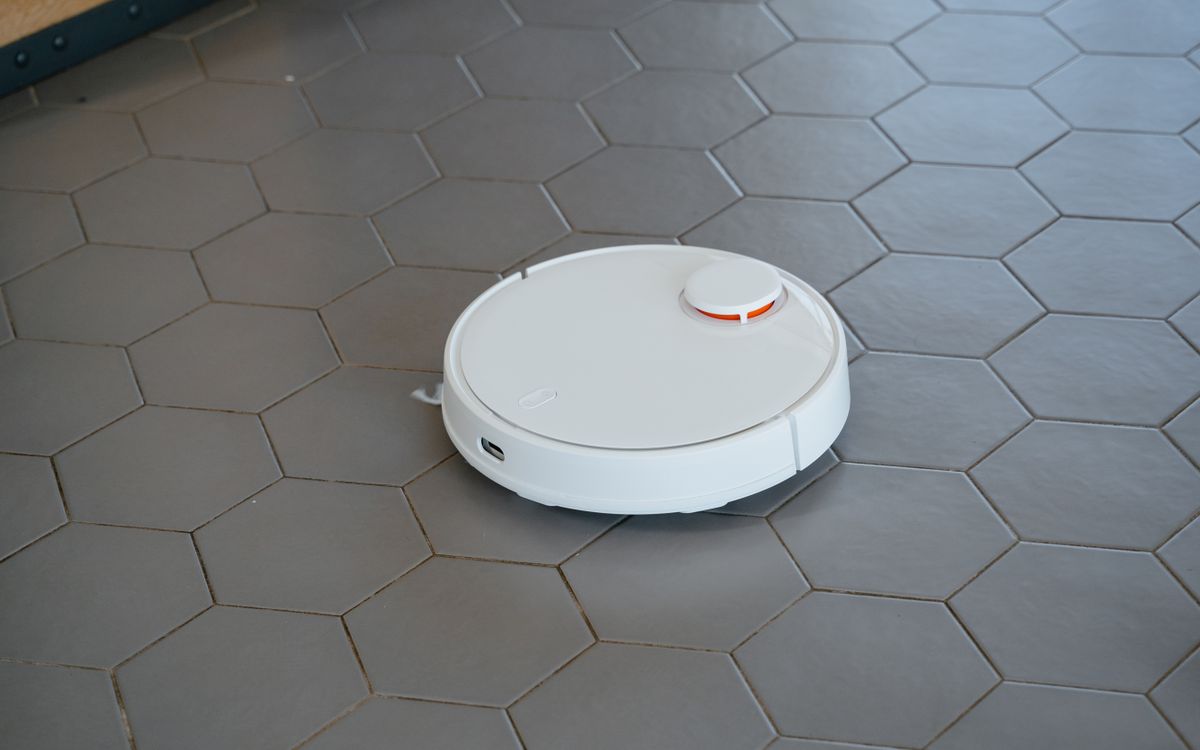
Pet hair is the stress test that separates robot vacuums into two groups. On light household debris, almost any robot with a decent brush performs acceptably; long, fine, constantly regenerating fur is what exposes the differences — bristle brushes that turn into dreadlocks, small bins that fill in a day, and optical sensors blinded by fluff until the robot crashes into the water bowl. The industry sells these machines by suction number, and that number is close to the least useful spec on the page for this job. This article explains what actually determines pet-hair performance, what auto-empty docks really cost, and which three models earn their prices in 2026.
Why brush design matters more than the pascal number
Every brand measures and advertises suction in pascals — 4,000, 6,000, 8,200 — and the figures are not comparable across manufacturers, a point reviewers who test dozens of machines make repeatedly. What translates a suction rating into clean carpet is the brush system: how the roller agitates carpet fibers to shake loose embedded hair, and whether hair wraps around it instead of getting conveyed into the bin.
Two designs dominate the current market. Rubberized single or dual rollers, like iRobot’s dual multi-surface rubber brushes and Roborock’s DuoRoller, resist hair wrap by design — hair tends to slip off or get cut between the dual rollers rather than winding around a bristled core. The alternative is a cutting system: MOVA’s Tri-Cut brushroll uses rotating blades inside the roller to slice tangled hair, and RTINGS’ testing of the P50 Pro Ultra found it picks up pet hair on carpet well, though hair still wraps occasionally and needs manual checks. The pattern across both approaches is the same: the brush, not the motor, is the part you will interact with on a shedding week.
Carpet versus hard floor: two different problems
Hard floors are the easy case. Nearly every mid-range robot sweeps surface fur off hardwood and tile in one pass; RTINGS’ pet-hair testing found even their flagship picks are outstanding on hard floors. Carpet inverts the difficulty. Embedded hair — fur that has worked down into pile — requires agitation plus suction plus multiple passes, and this is where cheaper robots and even flagships diverge: RTINGS notes that some of the best overall robots still leave small amounts of embedded hair behind in carpet.
The practical consequence for buyers: a home that is mostly hard floor with area rugs can buy mid-range with confidence, while wall-to-wall carpet in a shedding household justifies paying for a stronger brush system and multi-pass cleaning patterns. Shark’s Matrix Clean grid, for example, takes multiple passes over the same area — the company claims 30 percent better carpet cleaning than a single pass, a manufacturer figure worth treating as directional rather than gospel.
Auto-empty stations and what they actually cost
A robot bin in a multi-pet house fills in a day or two, and emptying a dustbin caked with compacted fur is the chore that makes people stop running the robot. Self-empty docks — the robot docks, and suction pulls its bin contents into a larger reservoir — are the single biggest quality-of-life difference in daily ownership.
But docks split into two economic camps. Bag-based systems like iRobot’s Clean Base dispose into sealed bags, which is hygienic but recurring: iRobot sells replacement dirt disposal bags at $19.99 for a 3-pack or $69.99 for a 12-pack, and one review guide estimates annual consumables for a heavy-pet household at roughly $150 to $200, higher than competitors. Bagless bases, like the one on Shark’s Matrix Plus, suck the bin into a washable HEPA-filtered canister rated for up to 60 days of debris, eliminating the bag budget — the trade-off is that you empty a container of loose fur yourself, outdoors, ideally.
Bag capacity numbers deserve the same skepticism as battery claims. The 60-day figure on Shark’s base assumes average household debris, not peak shedding season; owners of double-coated dogs report emptying the base closer to every three or four weeks in spring. Bag-based systems stretch further between interventions because the bag holds more than the robot’s bin, but every emptying is a consumable. Whichever camp you choose, the dock also needs clearance in your floor plan — these stations are substantially larger than the charging pucks of a few years ago, and a dock in a closet with the door shut starves some models of the Wi-Fi signal they need to report home.
Obstacle avoidance: pet bowls, toys and worse
Camera and laser navigation has moved from mapping rooms to identifying objects, and for pet owners the objects that matter are predictable: water bowls, chew toys, and the accident on the hallway floor. Systems with cameras or structured-light sensors — like the ReactiveAI setup on the Roborock S8, which combines 3D structured light with LiDAR — steer around cords, socks and bowls that would stall a purely LiDAR-dependent robot.
Pet waste is the extreme case, and it is the one place where iRobot still leads its field. The Roomba Combo j7+‘s PrecisionVision system was trained on millions of real pet accident images, and iRobot backs it with the Pet Owner Official Promise: if the robot runs over solid pet waste within the first 12 months, iRobot replaces it free after photo evidence. No other manufacturer puts money behind its avoidance claim, which is the clearest way to gauge confidence. The caveat applies to all camera-based avoidance: it is most reliable on hard floors in decent light, and no system at any price is infallible on dark carpet.
Pet bowls are the more common daily obstacle, and they stress different hardware. A raised water bowl with a metal base reflects LiDAR inconsistently, charging cables droop at exactly bumper height, and rubber chew toys sit low enough to defeat contact sensors — which is why camera or structured-light systems earn their premium in these households. Placement helps regardless of robot: feed pets away from the robot’s charging route, route cords along walls rather than across open floor, and run the first few cleanings while home so you learn what your specific unit’s sensors do and do not catch. Reviews are consistent that avoidance improves with each generation, but the floor you prepare matters as much as the sensor suite you buy.
The picks, in context
The Roborock S8 is the best overall choice for pet hair because it attacks the problem from both ends: a DuoRoller dual-rubber brush system that resists tangles, and 6,000Pa of suction for embedded hair in carpet. Its LiDAR-plus-structured-light navigation avoids pet bowls in both light and dark rooms, and the VibraRise mop lifts over carpet so mixed floors need no babysitting. The trade-off: the base S8 ships with a plain charging dock, so auto-empty means buying the S8+ tier.
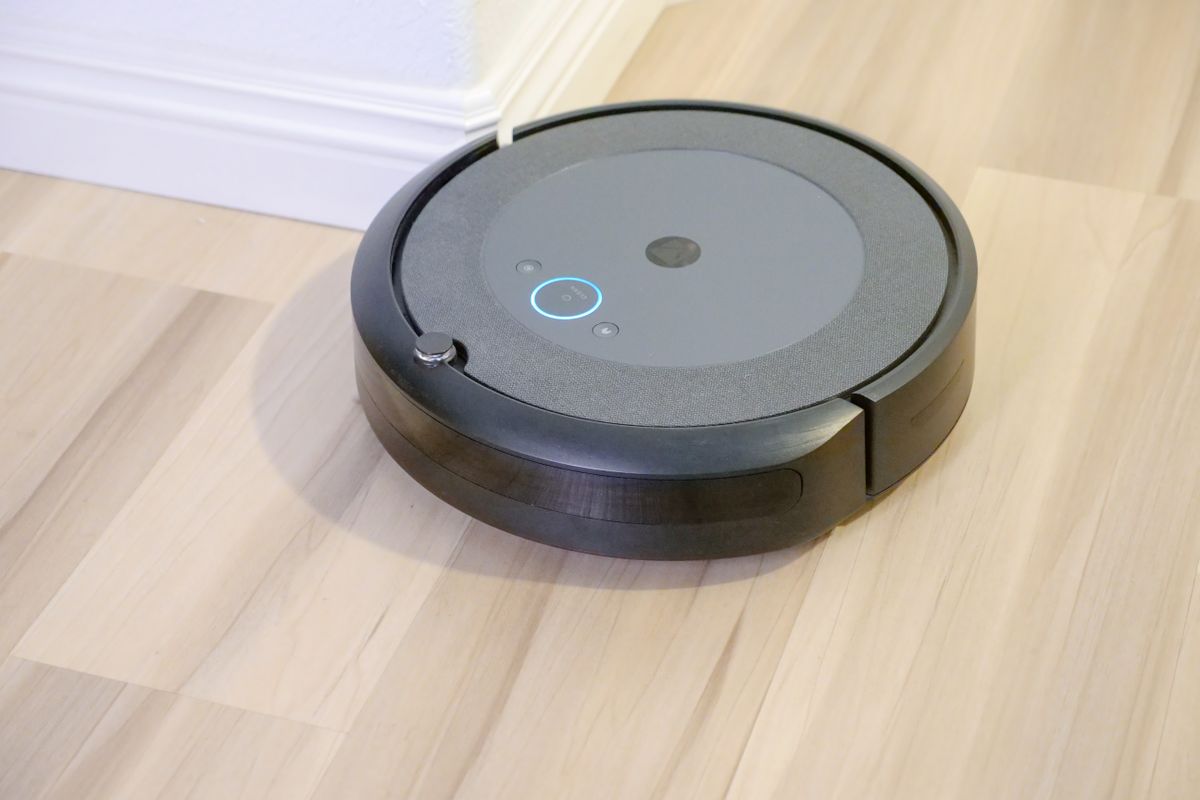
The Roomba Combo j7+ is the pick for households with accident-prone animals — puppies, elderly dogs, anxious cats. Nothing else in the industry carries a manufacturer-backed pet-waste guarantee, its dual rubber brushes handle long hair without wrapping, and the included Clean Base handles disposal. The cost is ongoing bag purchases and a suction rating well below Roborock’s class, which shows on plush carpet.
The budget slot goes to the Shark Matrix Plus 2-in-1 Robot Vacuum and Mop, listed at $349.99 on Shark’s site. It combines a self-cleaning brushroll engineered to resist pet-hair wrap, a bagless self-empty base rated for 60 days with true HEPA filtration trapping 99.97 percent of particles down to 0.3 microns, and the multi-pass Matrix Clean pattern for carpet. You give up premium obstacle avoidance — owner reports consistently mention it getting stuck on socks and sliding-door tracks — so pre-clearing the floor is part of the routine.
For the network side of modern cleaning robots, our guide on the Matter smart home standard explains why robot vacuums only joined Matter in late 2023, and what that does and doesn’t buy you. The same cautious-spec-reading applies to doorbells without subscriptions, another category where the recurring-fee math matters as much as the hardware.
Consumables and the honest lifetime cost
The sticker price is the entry fee. Filters, side brushes and mop pads are periodic purchases for every robot, and docks add their own line item — bags for iRobot, nothing but occasional rinsing for Shark’s bagless base, and mop-pad replacement across the board. Owner discussions on r/Roomba describe j7+ units still running after four to five years, which matters more than any spec: a machine that survives five years with $60 of annual bags beats a cheap robot replaced every two. Check parts availability before buying any brand, because a discontinued model with no filters is a doorstop on a charging schedule.
What to check before buying
Match the machine to the floor first: mostly hard floors make any of the three picks above comfortable, while deep carpet argues for the strongest brush system you can afford. Run the consumable math second — dock bags, filters, brushes — over three years, not one. Third, be honest about obstacle avoidance: if your pet has accidents, the waste-avoidance guarantee is worth real money; if your pet is merely furry, it is not. And distrust raw suction figures, which are marketing units rather than comparable measurements — our guide on how to read a spec sheet covers why specification literacy pays for itself across every category, vacuums included.