
The open-versus-closed decision is usually presented as a sound-quality question, which is misleading. Both designs contain the same class of drivers, and a good closed-back outperforms a mediocre open-back without effort. What the enclosure actually decides is acoustic behavior in your room: whether sound escapes the earcups, whether the room’s noise gets in, and how large the music feels between your ears. Pick the enclosure for the room and the use case, and the sound-quality question mostly answers itself — which is why this guide is organized around where you listen, not around which design gets praised in forums.
What the two designs physically do differently
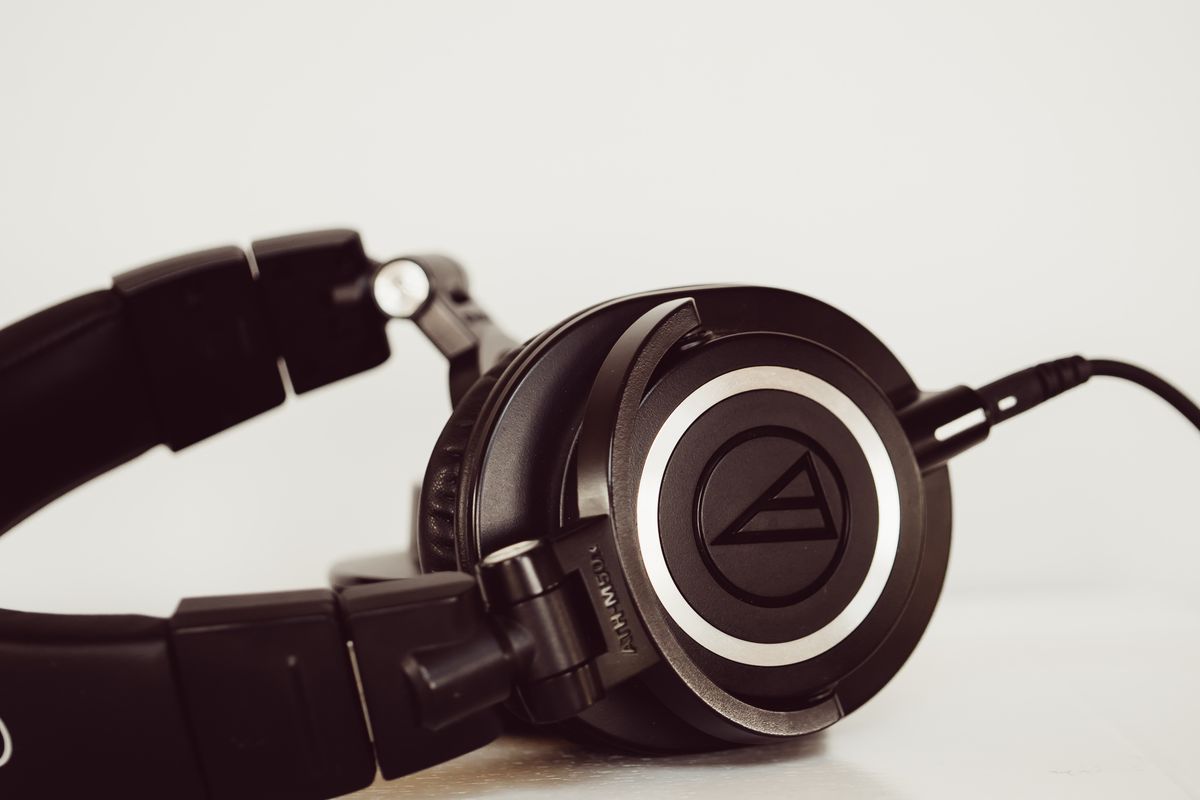
A closed-back earcup is a sealed chamber: the driver fires into your ear canal, and the rear of the driver faces a closed, often damped enclosure that traps the energy coming off its back side. An open-back earcup replaces that wall with a grille, perforations or foam — the driver’s rear radiation escapes into the room instead of reflecting inside the cup. Everything that follows, good and bad, traces to this single construction difference.
The acoustic consequences compound. The sealed chamber of a closed-back adds internal reflections and resonance that can lend a “boxy” or pressurized character to the sound; removing it is the open-back design’s core appeal. But the open rear also means the driver has no air spring behind it to damp and control its motion, and it means sound travels both directions through the grille with almost nothing in its way.
Sound leakage: the physics you can measure
Leakage is the amount of your music that reaches the room, and it is one of the few headphone attributes with a published measurement standard. RTINGS measures “overall leakage” with a microphone placed a half-foot from a test head playing a calibrated 100 dB SPL signal, then normalizes the result to a simulated one-foot distance; its published guidance treats under 35 dB of leakage as good performance. The measurement examples RTINGS publishes make the enclosure effect concrete: an open-back model like the Sennheiser HD 650 lands among the highest-leakage results, while a closed-back like the Sennheiser Momentum 2.0 sits among the lowest — the enclosure alone separates them more than driver quality ever could.
The practical reading: in a quiet office or a shared living room, an open-back headphone at normal volume is audible to the person next to you at roughly conversational loudness. Leakage rises with volume and with driver size, and planar-magnetic open-backs leak even more than dynamic ones above the treble range because the diaphragm radiates from both faces. The arm’s-length test is the honest home version of RTINGS’ rig — play your usual volume, take the headphones off, hold them at arm’s length; if you can follow the lyrics, so can everyone near you.
Isolation: what closed backs actually block
Closed-back headphones provide passive isolation only — the sealed cup and padded rim physically attenuate outside sound. It is real but modest: high frequencies get attenuated usefully, while low-frequency noise (transit rumble, HVAC drone) passes through the seal with little reduction, because passive barriers are inherently weak against long wavelengths. Active noise cancelling attacks exactly that low-frequency weakness with inverted sound waves; our guide on budget ANC headphones covers how much that adds in decibels and what it costs.
Open-backs provide close to zero isolation in either direction. The room’s ambience mixes into the music, which is simultaneously their most pleasant property — you can hear a doorbell, a colleague or a sleeping child without removing them — and their disqualifying property in noisy environments, because raising volume over room noise raises leakage and listening fatigue with it. No tip, pad or accessory meaningfully closes an open-back design; the vent is the product.
Soundstage: what “open” actually buys you
The soundstage claim for open-backs is real but easy to overstate. With the rear chamber vented, reflections that would otherwise bounce inside a sealed cup and re-enter the ear are gone, and the ear receives a cleaner direct signal plus small amounts of room-reflected sound. Listeners and measurements generally describe the result as more spacious and less “in-head” — instruments occupy positions that feel further apart and further away. RTINGS’ test data on the design difference supports the mechanism: identical drivers in open and closed enclosures measure with different resonance behavior, and the open version’s lack of cup resonance is the audible advantage.
The honest limits: soundstage perception depends heavily on the recording itself, and a well-executed closed-back with damped internals can project a wider image than a cheap open-back with ringing cup resonances. Treating “open = wide soundstage” as a tendency rather than a guarantee keeps the decision grounded — the tendency is strong enough to matter, not strong enough to override a room-based decision.
Matching the design to the room
Three environments, three answers. The private, quiet room — a home office at night, an apartment alone — is open-back territory: leakage disturbs nobody, the room’s silence lets the design breathe, and long listening sessions benefit from the open presentation. The shared or noisy space — an office, a café, any commute — demands closed backs, where modest isolation plus low leakage are the only behaviors that work; adding ANC makes the closed-back case decisive rather than merely correct. Mixed use, where headphones move between a quiet home and a loud commute, belongs to closed backs as well, because a headphone that only works in one room has to be two purchases instead of one.
One environment deserves explicit warning: aircraft and buses are the worst possible match for open-backs. The combination of near-zero isolation, low-frequency ambient noise and elevated listening volume produces both audible fatigue for you and maximum leakage for your neighbor.
The amplification catch on many open-backs
A practical asymmetry hides in the electrical specs. Many classic and current open-back designs target the audiophile market, where high impedance is a design choice for cleaner amplification — Sennheiser’s HD 650, for instance, is a 300-ohm design, and Beyerdynamic’s open-back line famously ships in 32-, 250- and 600-ohm variants of the same headphone. High-impedance headphones sip current but demand voltage, and a phone’s headphone output rarely supplies enough; the result is volume that turns up but dynamics that stay flat. Closed-back consumer headphones overwhelmingly sit in the 16–80-ohm range that every phone drives comfortably.
This is not a physics of open-backs — it is a market reality of where each design is sold — but it lands on the budget like a second purchase. Check the impedance row before buying any open-back under the assumption it will plug straight into a laptop, and our guide on reading a spec sheet covers how to weigh impedance against sensitivity, which together determine whether an amp is actually needed.
Common purchase mistakes
Three mistakes account for most open-back regret. The first is buying for the commute: an open-back on a train is inaudible-to-you music at maximum leakage, and no volume setting escapes the trap. The second is buying open-backs expecting isolation from household noise, then discovering the design transmits the room as faithfully as the music — roommates, dishwashers and doorbells included. The third is the inverse: buying closed-backs for a quiet private listening room and judging the soundstage as claustrophobic, when the design was simply matched to the wrong room. A fourth, quieter mistake is planar-magnetic leakage — some buyers know open-backs leak but underestimate how much more planar designs radiate in the treble; the arm’s-length test catches this immediately.
The decision, compressed
Choose open-back when three conditions hold simultaneously: your listening room is quiet and private, leakage affects nobody, and you value spacious presentation over portability. Choose closed-back when any of those conditions fail — noise around you, people around you, or the headphone leaving the house regularly. Check impedance before checkout on any open-back, since the amplifier it may require is part of its real price. And when a pair arrives, run the arm’s-length and seal tests in your actual room before the return window closes, because the room — not the spec sheet — is the court this decision is argued in.