
Action cameras converged on paper years ago: every box says 4K, waterproof, stabilized. The real differences in 2026 sit in the rows the box omits — how far underwater you can take the bare camera, how many bits per second the recorder actually writes, what happens to the battery at freezing temperatures, and which mounting standard your accessories will live on for years. This comparison covers the three cameras that matter most right now: DJI’s Osmo Action 5 Pro, Insta360’s Ace Pro 2 and GoPro’s HERO13 Black, plus last year’s Osmo Action 4 still selling at $239 on DJI’s US store.
What actually separates action cameras in 2026
Three hardware decisions define this generation. First, sensor size: DJI and Insta360 both moved to 1/1.3-inch CMOS sensors — the Action 5 Pro’s spec sheet lists 13.5 stops of dynamic range, and Insta360 quotes the same figure for the Ace Pro 2 — which is a meaningful step up from the 1/1.7-inch and smaller chips of a few years ago in dusk, forest and snow scenes. Second, dual screens: both OLED touchscreens on the Action 5 Pro reach 800 nits typical brightness, 1000 nits peak on the rear, which is the difference between seeing your framing and seeing your reflection at noon. Third, onboard storage: 47 GB usable inside the Action 5 Pro means a forgotten microSD card no longer ends a session.
Everything else — 4K/120 capture, 10-bit color, magnetic mounting — has spread across the lineup. That is good news for buyers, because it means the cheapest sensible camera no longer records obviously worse video than the flagship. The gaps that remain are behavioral, not resolution-based.
Stabilization: three systems, one job
Every current flagship stabilizes electronically and holds the horizon, but the implementations have different characters. GoPro’s HERO13 Black runs HyperSmooth 6.0, the sixth generation of the stabilization that started the arms race, and GoPro’s product page leans on its Emmy award for the technology. DJI’s Action 5 Pro offers RockSteady 3.0 and 3.0+, plus HorizonBalancing, which corrects horizon tilt up to ±45° at 4K/60 or below, and a full 360° horizon lock. Insta360’s Ace Pro 2 counters with FlowState and its own 360° horizon correction.
The distinction that matters in practice is horizon handling during rotational sports — mountain biking, skiing, motocross — where the camera pitches and rolls constantly. All three keep footage level; the residual differences show up in how aggressively each system crops to do it and how they handle repeated hard jolts, where older-generation systems used to wobble or “jelly.” Measurement outlets such as DPReview TV have found the top two systems close enough that accessory ecosystem and battery behavior should outweigh another stabilization generation on the box. For most buyers: if your riding is smooth and your horizons stay flat, the differences are invisible; if the camera spends its life upside down, test the horizon-lock mode before committing.
Waterproofing: bare camera versus the case
This is the row where marketing language does real damage. “Waterproof” on a box almost never means the depth you will actually dive to. The verified numbers: the Osmo Action 5 Pro is rated to 20 meters without a case and 60 meters with DJI’s waterproof case, carries an IP68 rating, and is certified to EN13319 — the international standard for dive accessories, which DJI says enables depth display from its built-in pressure sensor. The Ace Pro 2 is rated to 12 meters bare, 60 meters in its dive case. The HERO13 Black is rated to 10 meters bare.
Ten to twelve meters covers snorkeling, pool sessions and shallow reef; it does not cover recreational scuba, which routinely runs past 18 meters. The other failure mode is seals: every manufacturer warns that the battery door and USB-C port covers must be closed and clean before submersion, and one grain of sand across a gasket voids the rating in practice. If diving is the use case, buy the branded dive case, not a third-party one — depth ratings are certified as a system.
Bitrate, color profiles and why “5.3K” is not the whole story
Resolution numbers sell; bitrate and color depth decide what the footage actually survives. The Action 5 Pro writes at up to 120 Mbps, per DJI’s spec page — 15 megabytes every second. Bitrate is headroom: at 120 Mbps, fast-moving water, snow and foliage keep their texture instead of smearing into blocky noise, and grading software has more to work with. High-frame-rate modes compress harder per frame, so a 4K/120 clip at the same bitrate carries visibly more artifacts than 4K/30.
Color is the newer battleground. GoPro equips the HERO13 Black with 10-bit color, HLG HDR video and GP-Log for grading with LUTs, and quotes 24.7-megapixel frame grabs from its 5.3K footage. Insta360 pairs its 8K/30 and 4K/60 Sport HDR modes with Leica color profiles and a dual-chip pipeline dedicated to noise reduction. DJI’s Action 5 Pro leans on its 13.5-stop dynamic range sensor rather than a headline codec feature. All three approaches mean the same thing for buyers: the current generation grades like real cameras, so color science preference is now a legitimate tiebreaker — Insta360’s Leica look is punchy out of camera, GoPro’s log pipeline is the most flexible, DJI’s sensor does the best work with zero effort.
One practical warning: bitrates this high punish slow memory cards. Check the write-speed classes in our guide to SD card speed classes before buying storage for a 4K/120 camera.
Battery behavior, especially in the cold
Battery specs deserve more skepticism than any other row. DJI states 240 minutes for the Action 5 Pro’s 1950 mAh battery — measured at 1080p/24, with stabilization on but screens off and Wi-Fi off, in a controlled environment. GoPro states the HERO13 Black’s 1900 mAh Enduro battery records roughly 1.5 hours continuously at 5.3K30 or 4K30, and over 2.5 hours at 1080p30. Real mixed-use sessions land well below both figures once high frame rates, live screens and wireless links enter the picture.
Cold changes the math entirely. DJI rates the Action 5 Pro’s operating temperature at -20°C to 45°C and ships a battery explicitly marketed as low-temperature enhanced — a spec aimed at skiers and winter riders, where the previous generation’s runtime collapse was a common complaint among owners. GoPro’s Enduro battery line exists for the same reason: the company positions it for demanding conditions, and it comes standard in the HERO13 Black rather than as an accessory. Whichever camera you buy, two habits do more than chemistry: keep spare batteries warm inside a jacket, and start recording with the battery above room temperature rather than chilled from the car.
The mount ecosystem nobody budgets for
An action camera’s mounting standard is a decade-long commitment. GoPro’s two-prong finger mount is the industry’s common language — helmets, chest rigs, handlebar clamps and roll-bar mounts from dozens of manufacturers are built for it, and GoPro’s own HERO13 adds a magnetic latch system that still ends in the same mounting footprint. DJI moved its Osmo Action line to a magnetic quick-release design that snaps the camera in and out in a second, which is genuinely faster for helmet swaps but means the mountain of generic GoPro-pattern mounts needs the clip adapter that DJI includes in the box. Insta360 uses its own quick-release tab.
Before choosing, inventory what you already own. If you have a drawer of GoPro-pattern chest and helmet mounts, a DJI camera costs you nothing extra today but one adapter per mount. If you are starting from zero, the magnetic systems are the more convenient choice, and the price gap between ecosystems is a few adapters, not a few cameras.
The three picks
DJI Osmo Action 5 Pro — the best overall, at $319 from DJI’s US store. It combines the deepest bare-camera waterproofing in the group (20 m, EN13319-certified), 4K/120 at up to 120 Mbps, dual 800-nit OLED screens, 47 GB of built-in storage and a 240-minute battery spec backed by a -20°C operating rating. Its trade-off is DJI’s proprietary quick-release ecosystem, which needs adapters to fit the huge pool of GoPro-pattern mounts. For a first action camera that will ski, swim and ride, it covers the most failure modes at the lowest verified price in this group.
Insta360 Ace Pro 2 — the image-quality pick. Its 1/1.3-inch sensor behind a Leica SUMMARIT f/2.6 lens, 8K/30 recording, 4K/60 Sport HDR and a dedicated AI noise-reduction chip produce the best low-light and grading headroom here, and its 2.5-inch flip screen is the largest. The 12-meter bare waterproofing trails DJI’s 20 meters, and Insta360’s US pricing fluctuates enough that we chose not to print a figure — check the current store price. Choose it if footage quality outweighs dive depth and mount convenience.
DJI Osmo Action 4 — the budget pick at $239 on DJI’s US store. It keeps the 1/1.3-inch sensor, the 18-meter bare waterproofing, the magnetic mount and a 160-minute battery, and skips only the upgrades that matter least to casual users: built-in storage, the brighter OLED screens and the 240-minute battery. Recordings cap at lower frame rates than the 5 Pro, so high-speed sports lose some slow-motion headroom. At $80 under the 5 Pro, it is the sensible floor for occasional use.
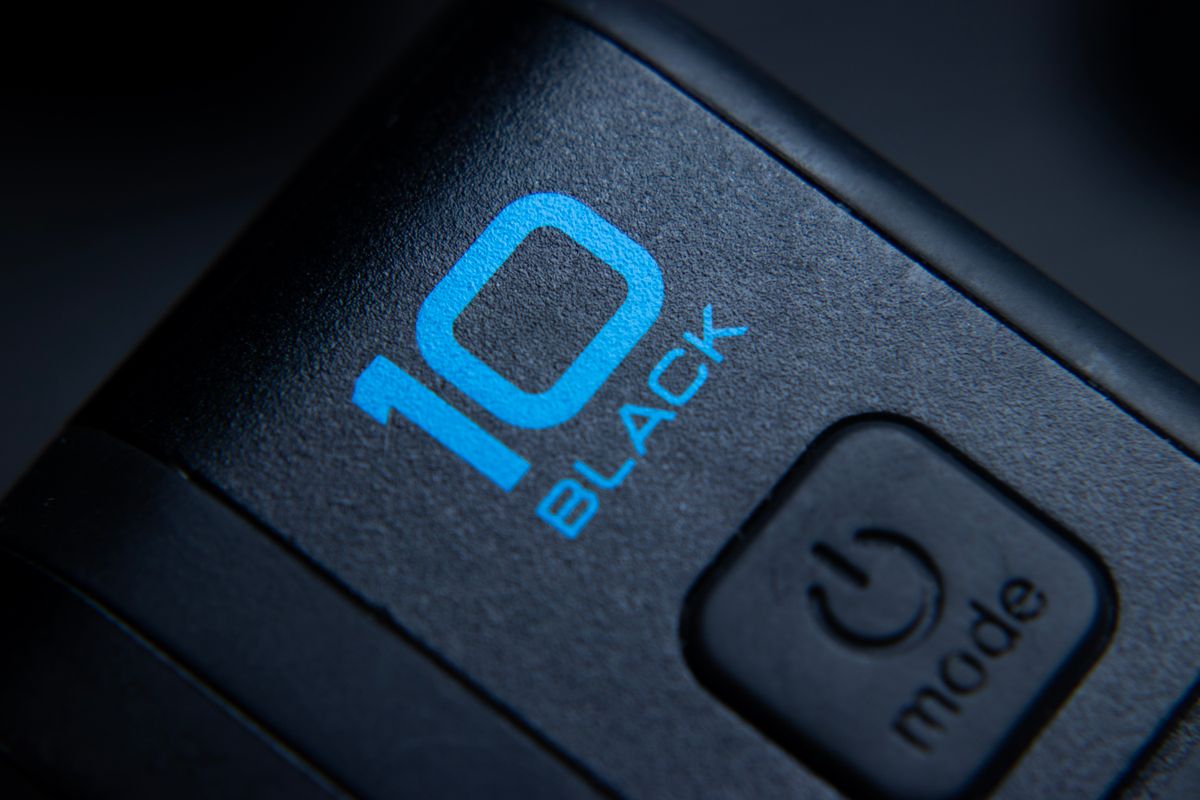
The GoPro HERO13 Black remains a specialist recommendation: its HB-Series lens mods (macro, ultra-wide, anamorphic, ND filters with auto-detection) and GP-Log pipeline make it the most expandable camera here for filmmakers, and its two-prong mount fits the largest accessory pool, but its 10-meter waterproofing and 1.5-hour battery spec trail DJI on the specs that fail hardest mid-trip.
How to choose
Match the camera to the depth rating you will actually use — 10–12 meters covers snorkeling, 20 meters covers most recreational dive training. Prioritize battery physics over resolution: a -20°C rating and a warm spare matter more than 8K. Count your existing mounts before switching ecosystems. And if aerial footage is part of the plan, mounting options diverge sharply there too — see our guide to drone rules for hobby pilots before attaching any camera to one.