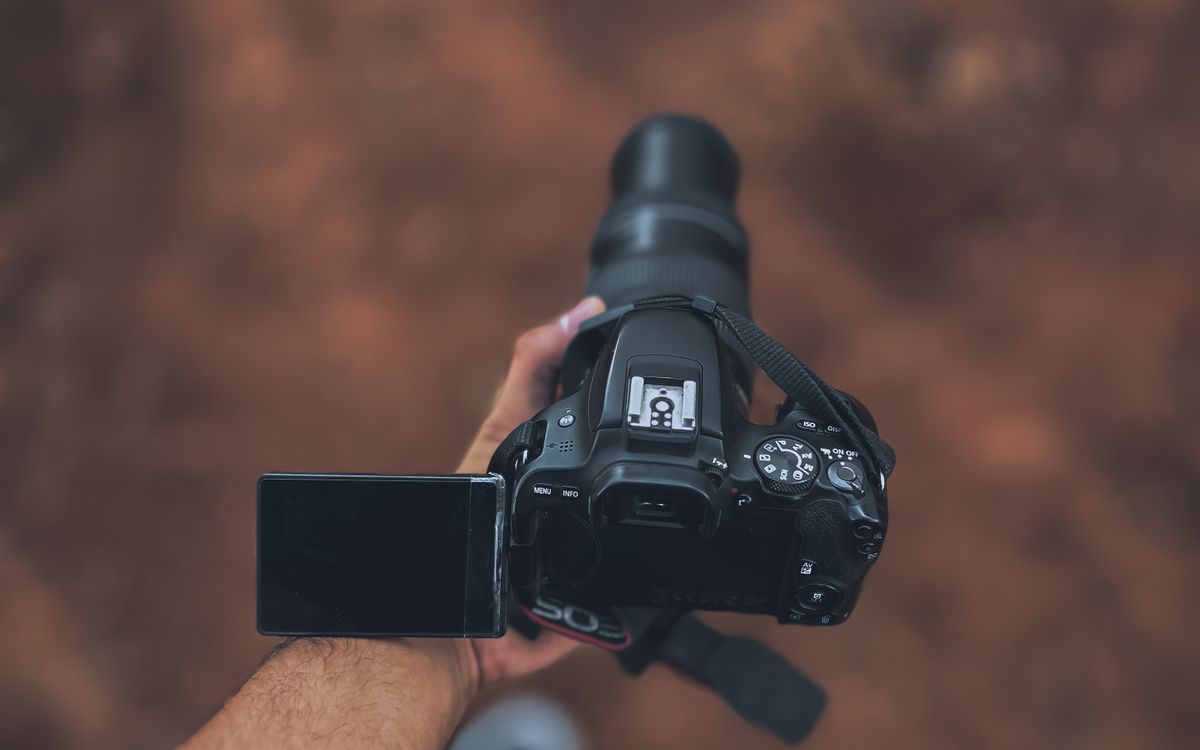
The phrase “budget mirrorless camera” hides a pricing trap: the number on the body is only the entry fee. Kit lenses cost extra or come bundled in ways that inflate the sticker, and the mount you choose decides what every future lens will cost you. Three cameras dominate the sub-$800 conversation in the US right now — the Canon EOS R50 at $729 for the body, the Sony a6100 at $798, and the Canon EOS R100 at $429.99 on Canon’s own US store. They share APS-C sensors and beginner-friendly autofocus, and they differ in exactly the places spec sheets make hard to compare: stabilization, lens ecosystems, 4K crops and viewfinders.
What “budget” actually buys in 2026
Entry-level mirrorless has settled into a clear formula. You get an APS-C sensor of about 24 megapixels, on-sensor phase-detection autofocus with face and eye recognition, a tilting or articulating screen, 4K video at 24 or 30 frames per second, and a body weight between 350 and 450 grams. All three cameras here fit that formula. What you do not get at this price is just as consistent: no weather sealing, no in-body stabilization, modest burst speeds, and a single UHS-I card slot.
That formula is genuinely good. A modern $700 mirrorless body with a decent lens attached will outperform the flagship DSLRs of a decade ago in autofocus and image quality. The reason beginners still end up disappointed is rarely the camera — it is buying the body and then discovering that the second lens, the fast memory card and the accessories each cost more than expected.
Sensor size versus megapixels
Camera marketing puts megapixels first because bigger numbers sell, but physical sensor size drives image quality more than pixel count does. An APS-C sensor measures roughly 23.5 × 15.6 mm, which is about 15 times the light-gathering area of a smartphone sensor. The Canon R50 and Sony a6100 both use 24.2-megapixel APS-C chips; the R100 uses a 24.1-megapixel variant of the same format; Nikon’s Z30 uses a 20.9-megapixel DX sensor that is the same physical size. All four produce files that handle large prints and heavy cropping without complaint.
The practical difference between 20 and 24 megapixels on the same sensor size is small — a few percent of linear resolution. The practical difference between an APS-C sensor and the smaller 1-inch chips in premium compacts is large, especially indoors and at night. When you compare cameras in this class, treat the sensor-size row as the one that matters and ignore anyone selling you resolution upgrades inside the same format. DPReview’s comparison of the R100 against its peers makes this visible: pixel counts all read “24MP” across the row while the sensor-area row is where the real distinctions sit.
Image stabilization: assume there is none
Here is the specification category where budget bodies quietly fall short, and where marketing language does its best work. None of the three picks has in-body image stabilization. Neither does the Nikon Z30, which instead offers a digital e-VR mode that crops the frame to smooth video. At this price bracket, IBIS shows up mainly in Micro Four Thirds bodies such as the OM System OM-5, which costs more than any camera in this guide.
What this means in practice: stabilization is a lens decision. Canon’s RF-S 18-45mm kit lens carries the “IS” label and optically steadies the frame; Sony’s 16-50mm power-zoom kit lens has OSS; Nikon’s 16-50mm has VR. A budget prime without stabilization will give you no shake reduction at all on any of these bodies. For handheld stills in daylight this rarely matters — shutter speeds are fast enough. It matters at dusk, indoors and for video, and it is one of the two or three reasons the total lens budget deserves more thought than the body budget.
The lens ecosystem is the real price tag
The camera body depreciates; the mount accumulates. This is the single most underrated factor in first-camera decisions, and it is where Canon and Sony part ways sharply.
Sony’s E-mount has been open to third-party manufacturers for years. Sigma, Tamron and Viltrox sell autofocus lenses for Sony APS-C bodies at prices Canon’s RF-S mount cannot match, because Canon keeps its RF mount design private. DPReview counted only four native RF-S lenses — the 18-45mm kit zoom, the 55-210mm telephoto, the 18-150mm all-in-one and the 10-18mm ultra-wide — at the time of its R100 review, and noted that Canon’s full-frame RF lenses work on APS-C bodies but are priced for full-frame buyers. Sony’s APS-C catalog plus third-party support means a usable two-lens kit for hundreds less, with specialty options like fast 56mm-equivalent primes sitting well under Canon’s equivalents.
Nikon’s Z-mount sits in between: a smaller but growing native DX lineup, with Nikon itself now making affordable primes like the 24mm f/1.7. Canon’s position is the honest trade-off of the R50 and R100: superb native kit lenses and excellent autofocus, but a closed ecosystem where every future lens is a Canon product at a Canon price.
If you expect to buy two or three more lenses over the camera’s life, that ecosystem math will exceed the body’s price difference several times over.
4K video and the crop problem
Every camera here records 4K, but “4K” on a spec sheet hides sensor-readout differences that change what your footage looks like. The Canon EOS R50 reads the full sensor width for its 6K-oversampled, uncropped 4K at 30p — B&H’s spec sheet confirms the full-width readout, and it is the only budget Canon that does this. The Sony a6100 also oversamples from a 6K capture area within its Super 35 frame at up to 30p. The Nikon Z30 records 4K30 as well and supports continuous recording for up to 2 hours 15 minutes, per Nikon’s published specs.
The cautionary tale is the Canon EOS R100. Its 4K/24p comes from a 1.5x crop of the sensor’s center, as DPReview’s review documents, and enabling Digital IS adds another 1.1x on top. Stack those: an 18mm lens on the R100 ends up behaving like a 43mm normal lens in 4K, which erases every wide-angle use case — rooms, interiors, group shots. The R100 is a fine stills camera at its price, but if video matters at all, the crop alone justifies the step up.
Frame rates tell a similar story. All three cameras top out at 4K 30p; none records 4K 60p. Slow motion means 1080p at 120 fps on all three. Buyers coming from phones that shoot 4K/60 should know this ceiling exists before choosing a “budget” body.
Viewfinders and screens
The electronic viewfinder is the most common omission in this class and the most personal. The Nikon Z30 has no viewfinder at all — Nikon designed it for vloggers and streamers who compose on the screen, and it has a fully articulating 1.04m-dot LCD to match. The Sony a6100 has a 1.44m-dot OLED finder, sharp enough but small. The Canon R50 carries a 2.36m-dot OLED EVF, the best in this group, though Camera Decision’s measurements put its magnification at 0.59x, on the small side once your eye is actually at the cup.
The screen side reverses some rankings. The R50’s 3-inch vari-angle screen is fully articulating and touch-enabled; the a6100 tilts but does not flip fully forward; the R100’s screen is fixed and not touch-sensitive at all — DPReview calls the non-touch fixed display “jarring in the smartphone era.” A beginner who mostly shoots stills at eye level can live with any of these. A beginner who vlogs or shoots self-portraits cannot: fixed screens and downward-tilting finders make solo framing a matter of guesswork.
The three picks
Canon EOS R50 — the best overall balance. It combines the uncropped 4K30 of the group, the sharpest EVF, a fully articulating touchscreen, and Canon’s Dual Pixel CMOS AF II with 651 focus zones and subject detection for people, animals and vehicles. The trade-offs are the closed RF-S lens catalog and a body price of $729 that does not include a lens — the 18-45mm kit runs $849 at B&H. For a beginner who values video and wants the least-compromised camera today, it is the one to beat.
Sony a6100 — the pick for long-term lens collecting. Its 425-point phase-detection AF with Real-time Eye AF remains competitive years after launch, and its 11 fps burst with AF/AE tracking leads this trio. The 1.44m-dot EVF is the weakest optic here and the 100 Mbps 8-bit video pipeline trails Canon’s, but E-mount’s third-party depth means your second and third lenses will be cheaper and more varied than anything the Canon bodies can access. At $798 body-only at B&H, you pay a premium on day one to save money from year two onward.
Canon EOS R100 — the budget pick with open eyes. At $429.99 for the body it is the cheapest real mirrorless camera Canon sells, and for daylight stills photography it delivers the same 24-megapixel APS-C files as cameras costing twice as much. The compromises are structural, not cosmetic: 4K/24p with a 1.5x crop, a 6.5 fps burst that drops to 3.5 fps with autofocus tracking, a fixed non-touch screen, and a small 2.36m-dot EVF. Buy it only if stills are the mission and the budget is hard-capped; buy the R50 if video or flexibility enters the picture.
A fourth body worth naming: the Nikon Z30 at $706.95 body-only at B&H, aimed squarely at creators, with no viewfinder and no IBIS but a fully articulating screen and USB-C power for long streaming sessions. It wins only for that specific use case.
How to decide
Budget the system, not the body: add one extra lens and $60–80 of cards and batteries before you fix a ceiling. Prioritize the lens mount if you expect to grow; prioritize uncropped 4K and the EVF if video is half your usage. Verify which spec rows — sensor size, stabilization, crop factors — actually changed between models, because megapixels almost never did. For the storage half of that equation, our guide to SD card speed classes explains which card specs matter for burst shooting, and choosing a tripod covers the accessory that outlasts every camera on this list.