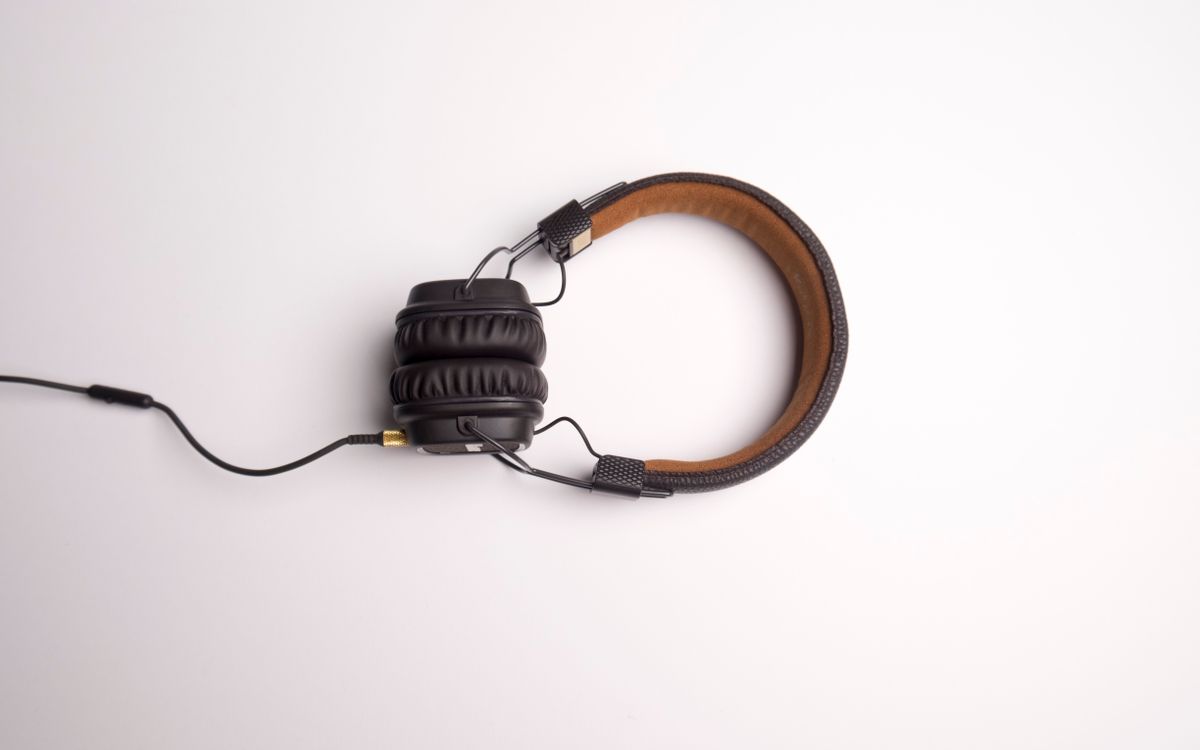
Headphone lifespan is not one number, because headphones do not die — they fail one part at a time, and the parts fail in a predictable order. The driver that produces the sound is almost never the problem; the battery that powers it, the pads that touch your skin, the cable that flexes, and the hinge that folds are. That order is why two headphones bought the same day can end differently: one design lets you swap its wear parts for pocket change, the other sends the whole product to a drawer the day its sealed battery fades. This guide walks the failure hierarchy, gives realistic numbers for each stage, and sets out when repair economics beat replacement.
The realistic lifespan ranges
Expectations differ sharply by type. Wired over-ear headphones with replaceable pads and a detachable cable routinely serve five to ten years; their wear parts are consumables and their electronics have nothing to degrade. Wireless over-ear headphones typically serve two to five years, with the battery as the eventual limiter — usable well past that, but holding noticeably less charge. True wireless earbuds are the shortest-lived category, commonly two to three years, because each bud carries a tiny battery that cycles daily and cannot be replaced without disassembling glued plastic.
Two distortions make those ranges look worse than they are. Survivorship cuts one way: the pairs people remember owning “forever” were usually wired models whose every failure was a $10 part. Planned-annoyance cuts the other: some modern headphones fail by software obsolescence — companion app updates abandoned, firmware unsupported — long before any hardware gives out. A five-year-old wired pair still plugs into anything; a five-year-old wireless pair may be fully functional hardware that no current phone’s companion app supports properly.
The failure hierarchy, in order
The order of failure is consistent enough to plan around. First: the battery on any wireless model, because it is electrochemically consumed by use. Second: ear pads and cushions, because skin oils, sweat and UV break down foam and leatherette on a schedule measured in months to a couple of years. Third: cables, on wired models, at the two points where flex concentrates — the strain relief where the cable enters the earcup and the plug. Fourth: moving hardware — folding hinges, headband sliders, adjustment notches — where plastic tolerances and repeated stress meet. Fifth and last: the drivers and internal electronics, which in a well-designed product usually outlive every item above.
The hierarchy is the useful part: it means “how long will these last” is really “how many of these parts can I replace.” A headphone whose top four failure points are all user-serviceable has no meaningful lifespan limit; a sealed wireless bud with an integrated cell has a lifespan equal to its battery’s, whatever the driver quality.
Battery: the 300–500 cycle reality
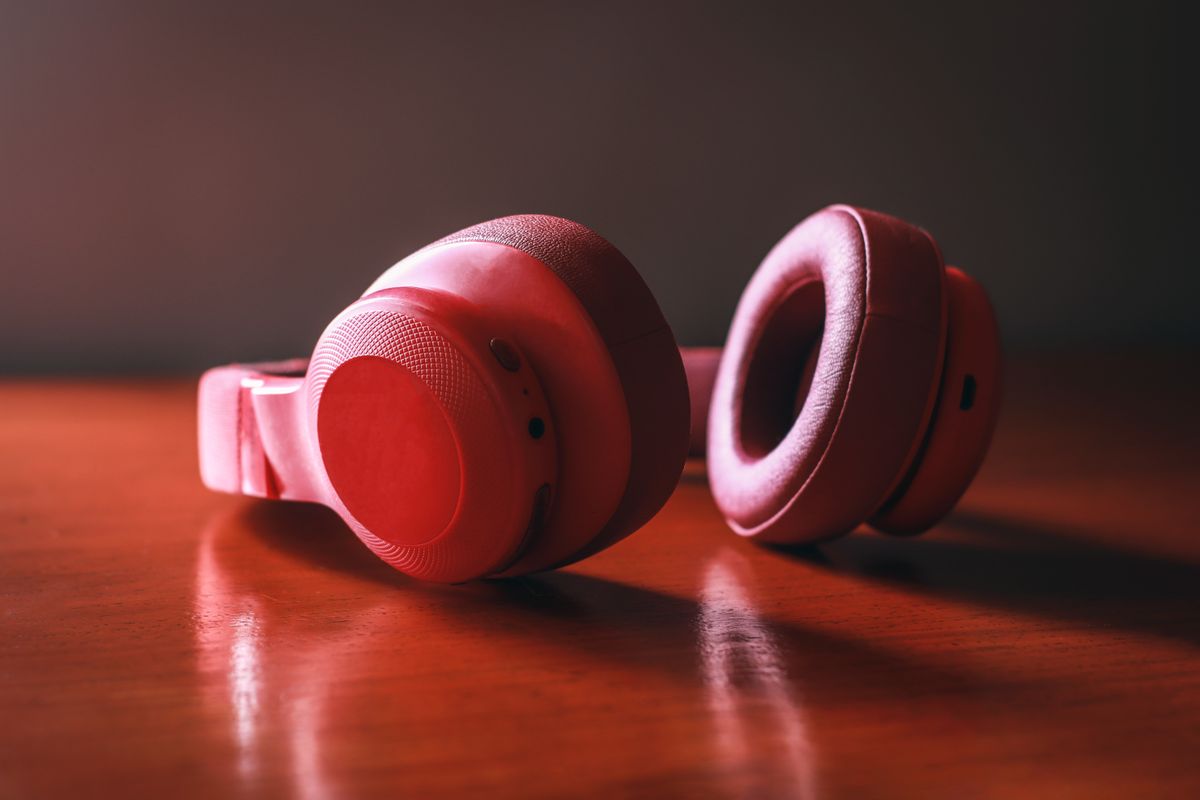
Wireless headphone batteries obey the same lithium-ion chemistry as every other consumer device. Battery University summarizes the industry norm: manufacturers conservatively rate most consumer lithium-ion cells for 300 to 500 full discharge-charge cycles before capacity falls to roughly 80 percent of original. A cycle counts cumulative discharge, not plug-ins — two half-drains equal one cycle — but a commuter charging wireless headphones nightly accumulates cycles at nearly one per day, which puts meaningful capacity fade inside the first two years of daily use.
Capacity fade does not kill the headphone; it erodes the experience. A pair rated at 30 hours that has lost 20 percent of capacity now runs about 24, then 20, then less — and at some point the charging rhythm stops being tolerable even though the sound is unchanged. Degradation accelerates with heat and with time spent pinned at full charge, which is why a pair left on a charging stand 24/7 ages faster than one charged and removed. Independent testers underline how much conditions matter to battery claims too: RTINGS’ drain tests calibrate volume at 84 dB and loop a bass signal until shutdown, a methodology that regularly lands below manufacturer “up to” numbers — a reminder that the battery spec you compare at purchase is a best case, not a promise.
Ear pads: the cheapest renewal in audio
Pads are the most frequent physical failure and the easiest fix. Leatherette cushions crack and flake within one to three years of skin contact; foam inside them compresses permanently, thinning the seal against your head, which audibly removes bass before any visible wear appears. Flattened pads also shift the driver’s position relative to your ear canal, degrading the tuning the designer calibrated.
Replacement cost and difficulty separate the products. Standard over-ear pads from major brands cost roughly $10–$30 a pair and attach by twist-off rings, magnets or exposed screws — a five-minute job. Some models ship with proprietary attachments or adhesive, and some true wireless buds have no pads at all. A pad-replaceable headphone at $150 is a better longevity purchase than a sealed one at $120, because the sealed pair’s identical pad failure is unfixable and eventually unbearable. When pads crack, replace them immediately rather than tolerating the flaking: degraded foam holds sweat against the driver housing, and moisture is a slow killer of internal electronics.
Cables, hinges and headbands
Cables fail at stress points, not along their length, and the design fix is detachability. A headphone with a 3.5 mm detachable cable converts the most common wired failure into a $10–$15 swap; a fixed-cable pair turns the same failure into soldering work or disposal. Buying wired headphones without a detachable cable is the single most avoidable longevity mistake in the category.
Hinges and sliders fail from material limits: repeated folding flexes plastic until it whitens and cracks, and headband steel or plastic slips under padding that compresses with age. No specification predicts this — it is where build quality earns its price — but owner review patterns after six to twelve months expose it reliably, and folding designs statistically stress more parts than non-folding ones. The mitigation is behavioral: extend the headband instead of stretching it over the neck, fold only when transporting, and never pick headphones up by a cup.
Drivers: the parts that rarely die
The transducer is the most protected component in the product: no moving contact with your hands, no skin contact, no mechanical cycling. Drivers fail mainly through abuse — moisture ingress from sweat and rain, physical puncture through a grille, or sustained playing at maximum volume with a distorted signal — and through pad decay, because crumbling foam lets debris reach the driver face. A driver that survives its first two years will usually outlast the headphone’s other parts by a wide margin, which is why the rest of this guide barely mentions sound quality: the sound outlives everything that carries it to your ear.
Repairability is a spec you can check before buying
Repair economics are decided at purchase, not at failure. Four checkable design choices predict how a headphone ages: detachable cable, replaceable pads, screwed (not glued) earcup assembly, and a published spare-parts or out-of-warranty service program from the manufacturer. Two or more of those features mark a model designed to be maintained; none of them marks a product with a battery-limited lifespan no matter its price. Teardown availability is the deeper check — a model with a documented teardown and an aftermarket battery supply can outlive its manufacturer’s interest in it.
The manufacturer’s warranty covers the defect window only, typically one to two years against manufacturing faults, and never covers the wear items this guide describes; our guide on whether extended warranties are worth it examines when the paid versions justify themselves. For a used or older pair, the same repairability logic drives the value: a five-year-old pad-replaceable headphone restored with $20 of new pads and a new cable is often a better buy than a sealed budget pair fresh from the box — our guide on refurbished versus used electronics covers how to buy those safely.
Repair or replace: the actual math
The decision reduces to comparing the failing part against the whole product. Pads at $15–$30 on any $100-plus headphone are always a repair. Cables at $10–$15 on a detachable design are always a repair. A battery service at $20–$40 makes sense on a $200-plus pair with good sound and a comfortable fit, and rarely makes sense on a $60 wireless model, where the same money approaches a replacement with a fresh battery and warranty. Hinge and headband breakage sits in between: no consumer repair path exists for most models, so a broken frame on a sub-$150 headphone is an end-of-life event unless the manufacturer sells a replacement part directly.
One environmental note reframes the small decisions: pads, cables and batteries are consumables, and treating them that way keeps a headphone’s embodied cost — the materials and manufacturing already spent — working for years longer. The guide on how long your devices should last puts headphone lifespans in the context of the rest of a typical device collection.
The buying checklist for longevity
Before buying, check four things in order. First, battery reality on wireless models: is the cell replaceable, and does a teardown exist? Second, the cable: detachable or fixed? Third, pads: standard replacement parts or proprietary seals? Fourth, the warranty length and the manufacturer’s out-of-warranty service terms. A pair that passes all four is buy-it-for-decade hardware; a pair that fails the first is on a battery timer no matter what it costs.
Care afterward is mostly chemistry management: wipe pads after sweaty sessions, keep headphones out of hot cars and off radiators, store wireless pairs around half charge rather than pinned at 100 percent, and replace consumables when they wear instead of waiting for them to fail. Do that, and the failure hierarchy works in your favor: the parts that die are the parts you can fix, and the part that matters — the driver — keeps playing.